Train Go Sorry By Leah Hager Cohen:
“I am a hearing student assigned the book Train Go Sorry in my Introduction to Humanities Class. Other readings assigned in this class include several essays from the book My California. In both books, we examined the cultures of California that form a microcosm of the U.S.; and the U.S. forms a microcosm of the world. In this essay, I will incorporate 4 required questions." The book Train Go Sorry is about the culture of deaf people, most of it taking place at the Lexington School of the deaf in New York. Leah Hager Cohen is the author, along with being the narrator, and a character in the story. Cohen lived the first few years of her life at the Lexington School, along with her family. She has always been part of this special family of Lexington, the deaf community. Cohen has had a connection with this school from the beginning of her life, knowing nothing different. Her grandparents were deaf, along with her grandfather being one of the first students of Lexington. Her father and mother worked in the school; her father Oscar becoming the superintendent later on. Cohen felt this school was her home, never loosing the desire to have a connection with it, even when she moved away. The school and the deaf community were always deeply connected to Cohen, something that she always felt good about.
Cohen tells the story of what goes on at Lexington with the main focus on two students; James Taylor, and Sofia Normatov. Cohen is able to give an account of these students’ lives in a very informative way; she is also a friend to them. Sophia and her family are from Russia where there are no schools for the deaf. Sofia, being deaf, is sent far away to a school for the deaf so she has little contact with her family. She finally gets the chance to come to New York and go to Lexington School. This is a wonderful opportunity for Sophia, she feels like she really fits in with the people at Lexington; the deaf community, like a family. She was never really close to her family, considering that she lived with them very seldom before coming to New York. Sophie and her family were also not allowed to practice their Jewish religion when they lived in Russia; now they had the freedom to be open about their religious beliefs. This was a better life for them. There were some problems for Sophie but mostly she was able to work through them. She is very outgoing and be able to excel in this new life of hers.
James Taylor, the other main character of the book is from New York and also deaf. He got to go to Lexington School but did not really advance well in the beginning until he was able to live on campus where he could devote more time to school. His home life had a great deal of distractions, including his brother Joseph going to prison for using a gun. Taylor struggles throughout his schooling but did not give up, along with the school not giving up on him. An example would be when he took the exit exam in his senior year; knowing he could not graduate unless he passes it. This test is a struggle for him and takes him several hours to finish, but he does not quit. As I read I find myself rooting for him; he does passes. He has many ups and downs this whole time at Lexington but finally at the end graduates, along with looking into going to college after. This is a big accomplishment for Taylor, he and his family know this, everyone is very happy for him. Taylor’s story of his struggles was a moving one; breaking away from a dead-end life to one of opportunities and accomplishes for him. Lexington changed his life, gave his a future.
James Taylor lost his hearing when he is quite young, his mother recalls the events when this occurred, it is quite moving; an image I will not forget. His mother explains how a dog kissed James, which is how she remembers it happening. He was with a dog earlier this day and the dog licked his face. He went to bed that night, woke up the next morning and he was never the same again. Taylor’s mom tells this story as how he looses his hearing. She says that he had been an active child, yet this morning he did not want to get up, he did not want to move. He wasn’t moving at all; she put him on the floor and he just collapsed. His skin felt hot and papery and she got the feeling he was actually losing weight by the moment; withering away. She picked him up and ran with him in her arms to the health center. The doctor knew his condition was due to the contact he had with that dog earlier that day. He was in the hospital for three months, and even after he went home he was still very weak, he could not walk, or talk. He had to learn everything over again. Taylor lost his hearing from that experience. This was a traumatic experience for both Taylor and his mother, and this happening for no real reason; from a dog licking him. This was a sad and moving story to me.
The term “Train Go Sorry” is an expression I had never heard of until I read this book. It refers to a deaf person when they have missed an opportunity, or missed some connection. This is the American Sign Language (ASL) equivalent of “you missed the boat”. I feel the book is referring to James Taylor when they refer to this phrase. Taylor understands what this means, he experiences it when he goes to see his brother in Rikers prison, twice, both times he is not able to see him, his brother is in court the days he comes to visit; “Train Go Sorry”. He himself has been missing the boat his whole life. Most of his life he doesn’t receive the proper support it takes to get him through school, or keep him safe from the streets. He lives a tough life. He then gets the opportunity to go to Lexington School but does not really start moving ahead until he becomes a live-in student there. This is still a struggle for him but he excels and gets his chance to do better. I feel because of Lexington School he finally gets the opportunity to find himself and make it, find his way. His brother Joseph on the other hand can also be referred to as “Train Go Sorry” and not given a second chance. Taylor’s brother will probable never get out of that “Train Go Sorry” life; this is a loss. The book tells it well: “Both brothers have traveled a long way from home. Now, with James at Lexington and Joseph at Rikers, as the crow flies they live less than a mile from each other. But one mile doesn’t begin to cover the distance between them”.
Leah Hager Cohen has a deep connection to the deaf culture, along with wanting to feel more of a part of it. I think Cohen is “walking in a deaf person’s shoes”. Cohen has always wanted to be a part of the deaf culture. She started her life in Lexington School, her parents working there, it was her life. She loved it there; everyone made her feel she was part of a family there; she didn’t really know any different, it was home. Everyone in the school was part of her extended family. She loved it there even after she moved away; she had a very special connection to this deaf community at Lexington and never wanted it to end. Even though she knew ASL and how to talk to deaf people she never quit fit in all the way, she was not deaf. Being deaf made a difference. Even when she has a male friend that she cared about very much she realizes she would never be a complete part of his life. She wants to have what they have, the deaf culture’s strong connection to each other and their culture. Cohen is walking in a deaf person’s shoes; she is not really able to be that person.
I enjoyed reading this book, along with there being many things I learned from it. The deaf culture is somewhat complicated, along with being misunderstood. There was an epidemic of the German measles in 1963 and 1964; this causing an infection in many pregnant women. This infection in the first trimester can cause congenital defects in babies. This outbreak caused an unusually high number of deaf children born in the mid-1960s. Finally in 1990 the Congress passed the “American with Disabilities Act” (ADA). This act ensured deaf people the protection from discrimination. This is the same protection that any ethnic minority is entitled to. A hearing person is not really able to be an actual part of the deaf culture. A hearing person is part of the hearing culture. Even when being able to communicate with signing there is always that separation of being from a different place. Most times when a hearing and deaf person have a marriage type relationship it does not last because of this missing connection. Interestingly to a deaf person only 30% of speech is visible on the lips, even in the best of circumstances. Most communication is further understood by surmising in different ways; this can be through facial expressions, jesters, or other people’s reactions to a situation. Sometimes female deaf interpreters wear lipstick so it is easier to see their facial expressions. People should know that because someone is deaf it does not mean they are less intelligent. This is a terrible stereotype that has no validation. The only difference between someone who is not able to hear what you are saying and a person that hears what you are saying is just that; they hear you. You should not be afraid to talk to a deaf person. Because a person acts somewhat different doesn’t mean that you can’t enjoy their company. They are people just like other people, they have different personalities, and sometimes a different way of expressing themselves.
In conclusion I want to say that this book was very interesting to me and gives an excellent insight into the deaf world and their culture. It gives you a good understanding of the controversy that is in that world of the deaf. There is a big debate that goes on with the deaf community, both from the educational and personal side. This book explains about the debate of Cochlear implants and how some people believe in using them to improve hearing, helping people to actually hear. They think of this as “fixing ones deafness”, a cure for the problem. Others look at deafness as a culture, a way of life. This isn’t something to “fix”, it is a way to live. Using ASL is how they communicate with this difference. Some people believe there should be choices for the people that face this life; not letting someone else make their choices for them. There should be special education for the deaf in sign language; they should not have to abandon their native speech; ASL, this is their language. This book gives you a real understanding of what the controversy is and how it is being dealt with in that community. This is something that continues to be debated. I feel more of the decisions should be given to the people that are affected; the deaf, this seems logical.
I would also like to say that when I first read this book and looked at the pictures in the front they were interesting but I felt no connection to them. When I finished the book and went back and looked a these same pictures I looked at them differently. I now knew these people and their stories; I really felt something for them. I was amazed at how I was connected to their lives and felt something for them. I also think that Leah Hager Cohen will eventually take over her father’s job as superintendent at Lexington school. Even if she doesn’t she will always be connected in some major way. Also I hope Lexington School will live on so it can continue in the advancement of young people. Lexington offers such a wonderful service; giving a richer life to people.
Videos Part 2
Big River – Deaf West Theatre:
This video shows part of a play taking place with deaf actors. There lots of dancing , music, and signing the words to the song. I felt the actors in this video of this play were very expressive and energetic. It showed so much passion in these people, and this was with only signing. The subtitles are helpful for the deaf and the hearing. There is a great deal of energy coming from these people in there expresssions. I really enjoyed watching it and watched it several times.
Marlee Matlin debut on Dancing with the Stars:
This video shows Marlee Matlin on Dancing with the Stars, she is great. She is an amazing person, so talented. Her dancing is astonishing to me, her ability to dance the way she does yet not even hearing the music. As she says in her interview; she feels the beat in her heart; how beautiful and intuitive of her. It is hard for me to really understand how she does it; I couldn’t. Looking at all her personal interviews you can see she is just an ordinary person, yet a very extraordinary person. I have always admired Matlin as an actress, and I am now even more amazed with her seeing her dancing. It might have been a little better if they used a female interpretive in her one interview, making it seem more like a female response; just a thought.
VSAI Day of the Arts at the Indiana Deaf School:
This video is about this school; the Indiana Deaf School that puts on a day of fun for children who want to join. This school gives these students a wonderful day of entertainment and a way to express themselves with different projects of art. This festival is put together with remarkable organization. There are 400 students, all helping and working together. This is a bi-lingual, bi-cultural arts and education experience making it unique. This event made a great deal of people, in both giving and receiving. It was very impressive to me.
Waiting on the World to Change:
This video shows signing and music. It shows how some people have thought that being deaf makes you bad. How some people just don’t understand how deaf people are the same as everyone else; they just can’t hear. People are quick to think because they are different they are doing something wrong. Even though these people are put down they keep waiting patiently for people to come along to understand. Toward the end of this video it shows all the accomplishments of deaf people to this world. Throughout this video it keeps singing “waiting for the world to change” by different deaf people; including one very adorable little girl. This is a good song-a-long song showing the amazing patience people can have.
Final Thoughts:
I really think that more people should be aware of how the deaf culture works. How they are normal people that just want the same rights and respect as the hearing; it is not too much to ask. I have learned that the deaf have a very strong bond together as a culture; this must help them deal with the uneducated population that does not treat them with respect. I feel that everyone should always remember that communication is very important. Dialogue is necessary to this communication; this is how we learn to understand each other. People communicate in all different languages, including ASL. Everyone should show respect to each other for how they choose to communicate.
The video tapes were very informative and entertaining. They were insightful and really got me thinking in another direction. I was able to go to other cites that were connected to these. There were more interviews and information I found. I find that I am able to find things pretty easy once I start looking. I had an informative search, it was good.
I really enjoyed reading the book "Train Go Sorry"; I feel it gave me a great deal of interesting insight to the deaf culture. It was informative about the controversies’ that go. It was a very easy reading book with some fascinating stories that captured my interest. The book had a combination of documentary, personal stories, and information giving book. I got connected with the characters, and wanted to hear more about them. I definitely have a more informed understanding of the deaf culture and their struggle to be heard; to fit in.
This was an enjoyable assignment for me.
Monday, July 20, 2009

Sunday, July 12, 2009
Week 5
Group #2
#1 - Ode to Cal Trans
by Hector Tobar:

http://www.hollywoodfreewaycentralpark.org/docs/HFCP_Visualize.pdf
http://www.lhttp/www.lataco.com/taco/bombing-the-101-hollywood-freeway
http://en.wikipedia.org/wiki/Caltrans
http://caltrans-opac.ca.gov/construc.htm
http://caltrans-opac.ca.gov/construc.htm
Bombing the 101 ~ Hollywood Freeway

In a state report card (.pdf) evaluating all the Caltrans districts, 7, which is responsible for Los Angeles and Ventura counties, has the worst grade. "It's actually kind of appalling," a staff member of Councilwoman commented.

110 & 105 Interchange

Los Angeles Interchange complex is the busiest freeway.
East Los Angeles Interchange complex is the busiest http://www.bing.com/images/search?q=pictures+of+the+L.A.+freeway&go=&form=QBIR&qs=n#focal=258725ade8b221e5031568863192d166&furl=http%3A%2F%2Fwww.withfriendship.com%2Fuser%2Fimages%2F567%2Finterchange.jpg
“The people of Southern California are in a love hate relationship with their freeways. The logo of Los Angeles could be a number of things, but it might very well in fact be one of the automobile. There is an intensity and power found on Los Angeles freeways rarely found in other big cities. The freeways in Los Angeles were among the first and oldest in the nation. When there is little traffic on the freeways, typically extremely late at night but during the day as well depending on which freeway in question and the time of day, they work wonderfully - you can zip around from city to city, from freeway to freeway just like that.”
http://www.davestravelcorner.com/articles/los-angeles/LA-Freeways.htm

These freeways can be crowded and frustrating to the drivers on them. To experience driving in the L.A. area you know what is meant by this. People are well aware of exactly what you mean. Known as the arteries of the L.A. basin these freeways are often clogged.

#2 – montalva, myths and dreams of home
By Thomas Steinbeck
Big Sur

McWay Cove and waterfall at Julia Pfeiffer Burns State Park - Photo: ©Stan Russell
History: The first people to inhabit Big Sur were the Native American tribes; Ohlone, Esselen, and Salinan. They lived in Big Sur for thousands of years. Spanish mariners were the first Europeans to observe Big Sur, led by Juan Cabrillo in 1542. Colonizing this southern area in 1770, led by Gaspar de Portola. This was along with Father Juniper’s Serra founding the missions in the Monterey Bay. Given the name for this region; “pais grande del sur”, meaning “Big South Country”. The rest of Big Sur became part of Mexico when it gained its independence from Spain in 1821, with the rest of California. In the 1800’s there was a gold rush boom in this area along with most of the redwood trees being cut down.

The Dark Watchers of California: http://en.wikipedia.org/wiki/History_of_California_to_1899
“From about Avila Beach, through San Luis Obispo, and all the way up to Monterey, runs the Santa Lucia Mountains. Lurking within these mountains are the strange and mystifying Dark Watchers. The Dark Watchers, as they have come to be known, are apparently giant human like phantoms that are only seen at twilight, standing silhouetted against the night sky along the ridges and peaks of the mountain range. When spotted, the beings are usually seen staring off into the open air of the mountains seemingly at nothing in particular before vanishing into thin air occasionally right before the spectators eyes. Who or what the Watchers are, no one knows. Where they came from or why they are there, again lost in speculation. And what they are looking for or watching is beyond anyone's current comprehension.” http://www.weirdca.com/location.php?location=179rnia
#3 – The Last Little Beach Town
By Edward Humes
Seal Beach

Photos above show the Seal Beach beaches, Seal Beach Main Street, Red Car Museum, Slick - The Seal Beach mascot on the Seal Beach Pier and a picture of the Seal Beach Pier.
Seal Beach is located at the northern most corner of Orange County boarding Los Angeles county of California. It is a quaint old fashioned town that that has the old time feel of America during the mid 1900’s; including a beautiful beach and pier. It was named for the seals that used to swarm the waters; most of the seals have left the area. Today Seal Beach is a quiet family friendly town with a great location for swimming, dining, fishing, shopping, windsurfing, and kite surfing. It also is where a T.V. crew occasionally might set up a shoot. Seal Beach is a fun place to visit.
http://www.beachcalifornia.com/seal.html

http://en.wikipedia.org/wiki/Seal_Beach,_California
This looks like a fun place to visit.
#4 – Surfing
By Matt Warshaw

Riding these amazing Maverick waves is beautiful. These pictures are from the Maverick Surf contest in Half Moon Bay of 2006. I think the photos tell the story the best.
http://www.oceanlight.com/spotlight.php?img=15308
“Just off the Half Moon Bay coast, winter storms and underwater geography combine to create some the world's biggest and most dangerous waves. The Mavericks Surf Contest gives the world's best surfers a chance to pit their skills against the big ones that can rise over 50 feet high, but this contest has an interesting twist. No one knows when it will be held until just 24 hours before it starts.”
http://gocalifornia.about.com/od/topcalifornia/a/mavericks_surf.htm


The Mavericks Surf Contest
The first Mavericks Surf contest was held in 1999. It takes place at an ocean reef off Pillar Point near Half Moon Bay. The best time to catch the big waves would be in the winter; December to March. Someone watching the waves sends information when the conditions are right to 24 preselected contestants. The surfers then have 24 hours to make it to compete in the Contest. The winner can win up to $30,000.
10 Students Views:
Aloma: “I never knew that the weigh of a tractor would make a difference on the soil and crops. But now when I really think about it, it does.” - This is an interesting fact that I just would never have thought would have made a big difference.
Daniel: “What I learned through this reading was about Seal Beach itself. I had never heard of the area, a couple years ago I had spent 3 weeks in Southern California, I was within 10 minutes of this area, and never knew it was there. Sounds like a great place to stop on another trip.” – I never heard of Seal Beach either until I read this story. I would like to visit there some day.
Marissa: “I did not know CalTrans put out a white helmet that acted as a memorial for a worker that was killed. It is a nice gesture but I also know they take them down as they did not want the highway looking like a cemetery.” – I had never heard of this, it is a respectful act.
Nicholas: “Didn’t know: Maverick’s is named after a white-haired German Shepherd that loved to surf.” - I was not aware of this until I read the story, interesting.
Teresa: “Three Hawaiian teenagers attending military school were the first surfers in America, the year was 1885.” - This was a very fascinating fact to me.
Terrie: “The one thing I didn’t know: I was interested in the results of the teachers science-test. I did not know that if you cover a piece of cardboard with Vaseline and face it toward the freeway that it will turn back in a few days. Such an eye opener on how cars cause such pollution.” – I thought this was an interesting, along with being a humorous fact also. Simple facts.
Vanessa: “I did not know that in a lot of other countries there is no real distinctive freeways or highways where pedestrians etc weren’t allowed to walk around.” – It is interesting to think that our country is so unique.
Lemlem: “That Berkeley population is more than one hundred thousand people with another thirty thousand to account for the transient population of UC Berkeley.” – This is an interesting fact I just never thought about.
Chandavid: “Amusement parks have not changed so drastically since the past.” - It is interesting to think that with all the advanced technology we have, amusement parks just go about pretty much being the same.
Rachel: “The first myths of California were bon in the early 1500’s. It’s hard to imagine that back in the early 1500’s people were inspired by the myths and thoughts of a paradise filled with opportunity and wealth.” – I felt the same way after reading this story. It is hard to believe that California was thought of this way so long ago.
#1 - Ode to Cal Trans
by Hector Tobar:

http://www.hollywoodfreewaycentralpark.org/docs/HFCP_Visualize.pdf
http://www.lhttp/www.lataco.com/taco/bombing-the-101-hollywood-freeway
http://en.wikipedia.org/wiki/Caltrans
http://caltrans-opac.ca.gov/construc.htm
http://caltrans-opac.ca.gov/construc.htm
Bombing the 101 ~ Hollywood Freeway

In a state report card (.pdf) evaluating all the Caltrans districts, 7, which is responsible for Los Angeles and Ventura counties, has the worst grade. "It's actually kind of appalling," a staff member of Councilwoman commented.

110 & 105 Interchange

Los Angeles Interchange complex is the busiest freeway.
East Los Angeles Interchange complex is the busiest http://www.bing.com/images/search?q=pictures+of+the+L.A.+freeway&go=&form=QBIR&qs=n#focal=258725ade8b221e5031568863192d166&furl=http%3A%2F%2Fwww.withfriendship.com%2Fuser%2Fimages%2F567%2Finterchange.jpg
“The people of Southern California are in a love hate relationship with their freeways. The logo of Los Angeles could be a number of things, but it might very well in fact be one of the automobile. There is an intensity and power found on Los Angeles freeways rarely found in other big cities. The freeways in Los Angeles were among the first and oldest in the nation. When there is little traffic on the freeways, typically extremely late at night but during the day as well depending on which freeway in question and the time of day, they work wonderfully - you can zip around from city to city, from freeway to freeway just like that.”
http://www.davestravelcorner.com/articles/los-angeles/LA-Freeways.htm

These freeways can be crowded and frustrating to the drivers on them. To experience driving in the L.A. area you know what is meant by this. People are well aware of exactly what you mean. Known as the arteries of the L.A. basin these freeways are often clogged.

#2 – montalva, myths and dreams of home
By Thomas Steinbeck
Big Sur

McWay Cove and waterfall at Julia Pfeiffer Burns State Park - Photo: ©Stan Russell
History: The first people to inhabit Big Sur were the Native American tribes; Ohlone, Esselen, and Salinan. They lived in Big Sur for thousands of years. Spanish mariners were the first Europeans to observe Big Sur, led by Juan Cabrillo in 1542. Colonizing this southern area in 1770, led by Gaspar de Portola. This was along with Father Juniper’s Serra founding the missions in the Monterey Bay. Given the name for this region; “pais grande del sur”, meaning “Big South Country”. The rest of Big Sur became part of Mexico when it gained its independence from Spain in 1821, with the rest of California. In the 1800’s there was a gold rush boom in this area along with most of the redwood trees being cut down.
Big Sur Natural History
Information and articles about the diverse natural history of Big Sur, Monterey County, and the Central Coast of California. The articles by Steven Harper were previously published in Monterey County magazine and Big Sur magazine.
Steven K Harper http://www.stevenkharper.com/history/
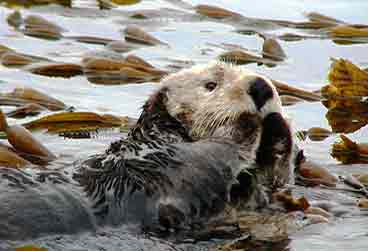
Kings of the Kelp: California Sea Otters

The Dark Watchers of California: http://en.wikipedia.org/wiki/History_of_California_to_1899
“From about Avila Beach, through San Luis Obispo, and all the way up to Monterey, runs the Santa Lucia Mountains. Lurking within these mountains are the strange and mystifying Dark Watchers. The Dark Watchers, as they have come to be known, are apparently giant human like phantoms that are only seen at twilight, standing silhouetted against the night sky along the ridges and peaks of the mountain range. When spotted, the beings are usually seen staring off into the open air of the mountains seemingly at nothing in particular before vanishing into thin air occasionally right before the spectators eyes. Who or what the Watchers are, no one knows. Where they came from or why they are there, again lost in speculation. And what they are looking for or watching is beyond anyone's current comprehension.” http://www.weirdca.com/location.php?location=179rnia
#3 – The Last Little Beach Town
By Edward Humes
Seal Beach

Photos above show the Seal Beach beaches, Seal Beach Main Street, Red Car Museum, Slick - The Seal Beach mascot on the Seal Beach Pier and a picture of the Seal Beach Pier.
Seal Beach is located at the northern most corner of Orange County boarding Los Angeles county of California. It is a quaint old fashioned town that that has the old time feel of America during the mid 1900’s; including a beautiful beach and pier. It was named for the seals that used to swarm the waters; most of the seals have left the area. Today Seal Beach is a quiet family friendly town with a great location for swimming, dining, fishing, shopping, windsurfing, and kite surfing. It also is where a T.V. crew occasionally might set up a shoot. Seal Beach is a fun place to visit.
http://www.beachcalifornia.com/seal.html

http://en.wikipedia.org/wiki/Seal_Beach,_California
This looks like a fun place to visit.
#4 – Surfing
By Matt Warshaw

Riding these amazing Maverick waves is beautiful. These pictures are from the Maverick Surf contest in Half Moon Bay of 2006. I think the photos tell the story the best.
http://www.oceanlight.com/spotlight.php?img=15308
“Just off the Half Moon Bay coast, winter storms and underwater geography combine to create some the world's biggest and most dangerous waves. The Mavericks Surf Contest gives the world's best surfers a chance to pit their skills against the big ones that can rise over 50 feet high, but this contest has an interesting twist. No one knows when it will be held until just 24 hours before it starts.”
http://gocalifornia.about.com/od/topcalifornia/a/mavericks_surf.htm


The Mavericks Surf Contest
The first Mavericks Surf contest was held in 1999. It takes place at an ocean reef off Pillar Point near Half Moon Bay. The best time to catch the big waves would be in the winter; December to March. Someone watching the waves sends information when the conditions are right to 24 preselected contestants. The surfers then have 24 hours to make it to compete in the Contest. The winner can win up to $30,000.
10 Students Views:
Aloma: “I never knew that the weigh of a tractor would make a difference on the soil and crops. But now when I really think about it, it does.” - This is an interesting fact that I just would never have thought would have made a big difference.
Daniel: “What I learned through this reading was about Seal Beach itself. I had never heard of the area, a couple years ago I had spent 3 weeks in Southern California, I was within 10 minutes of this area, and never knew it was there. Sounds like a great place to stop on another trip.” – I never heard of Seal Beach either until I read this story. I would like to visit there some day.
Marissa: “I did not know CalTrans put out a white helmet that acted as a memorial for a worker that was killed. It is a nice gesture but I also know they take them down as they did not want the highway looking like a cemetery.” – I had never heard of this, it is a respectful act.
Nicholas: “Didn’t know: Maverick’s is named after a white-haired German Shepherd that loved to surf.” - I was not aware of this until I read the story, interesting.
Teresa: “Three Hawaiian teenagers attending military school were the first surfers in America, the year was 1885.” - This was a very fascinating fact to me.
Terrie: “The one thing I didn’t know: I was interested in the results of the teachers science-test. I did not know that if you cover a piece of cardboard with Vaseline and face it toward the freeway that it will turn back in a few days. Such an eye opener on how cars cause such pollution.” – I thought this was an interesting, along with being a humorous fact also. Simple facts.
Vanessa: “I did not know that in a lot of other countries there is no real distinctive freeways or highways where pedestrians etc weren’t allowed to walk around.” – It is interesting to think that our country is so unique.
Lemlem: “That Berkeley population is more than one hundred thousand people with another thirty thousand to account for the transient population of UC Berkeley.” – This is an interesting fact I just never thought about.
Chandavid: “Amusement parks have not changed so drastically since the past.” - It is interesting to think that with all the advanced technology we have, amusement parks just go about pretty much being the same.
Rachel: “The first myths of California were bon in the early 1500’s. It’s hard to imagine that back in the early 1500’s people were inspired by the myths and thoughts of a paradise filled with opportunity and wealth.” – I felt the same way after reading this story. It is hard to believe that California was thought of this way so long ago.
Tuesday, July 7, 2009
Week 4
Week 4 Due 7/9 Group #2
1. Title & Author: Ode to Caltrans by Hector Tobar
2. Summary: This is a story that takes place in the Los Angeles area of California. The narrator is commuting on the freeway, recalling the old days of his youth, remembering how it was. He appreciates the Caltrans system and how it works. He gives the example of the Middle East having used Cal Tran’s ideas for transportation and how it just does not work there. California has a system that works; we have enforceable rules, and an etiquette that most people abide by. As he ages he does realize how dangerous the system can be; choosing to stay off the freeway when delivering his wife to the hospital when she is in labor. He reminisces when he was a new driver and the feelings he had driving this freeway as an apprentice commuter. California adulthood meant getting a driver’s license. Driving this freeway gives him a sense of wonder.
3. Favorite Quote: “I prepared to enter the world inside my mother’s womb as she rode in Booker convertible, the top down because he couldn't’t get it to close. From the back seat, she looked up through the cold February air at the concrete underbelly of the great Four-Level Interchange, the first nexus of the regional freeway grid, a monument to modernity where buses and tanker trucks could float for a moment or two in the California sky. Here, the Pasadena, Hollywood and Santa Ana freeways and a half dozen ‘transition roads’ crisscrossed in an enormous cement starburst.” Page 58
4. Think Of: The reading made me think of the huge, crazy Los Angeles freeway. Looking down at it in its wild zig zags, crossing every which way, yet in an organized orchestrated way. Seeing miles of freeway incorporating the Santa Ana, the Hollywood, and the Pasadena freeways; gets you through the Los Angeles freeway on your merry way.
5. Did Not Know: I did not know that Iraq has a freeway system similar to ours here in California. “Saddam built highways that are a kind of Middle Eastern tribute to Cal Trans.” They look similar to ours except “for the large number of Bradley Fighting Vehicles cruising in the fast lane, and the peculiar habits of the local drivers.” This fascinated me.
1. Title & Author: Montalvo, Myths, and Dreams of Home by Thomas Steinbeck
2. Summary: This story looks at California from the perspective of where its name comes from, its origin. This is along with explaining the myths that surround it. This is looking from the literary community. California has beautiful vistas; a utopian invention of dreams. The author states that hundreds of people have looked toward California’s beauty, not giving a second thought to the other 48 states. California is known as a fruitful paradise, there are many that dream of coming here. California has so much beauty to offer; like the magnificence of a sunset seen from high above Big Sir.
3. Favorite Quote: “Of course, we hard-strung old natives know better, or at least think we do, but that’s an illusion of no lesser dimensions than the original myth. For it’s a reality that those of us who can remember the California of forty of fifty years ago cling to our own memory-myths more tenaciously than anyone else. For recollection will never allow ‘old hands’ to concede that present myth could hold a match to the glorious re-imaginings of the past”.
Page 65
4. Think Of: This reading makes me think of our beautiful California, my home. It reminded me of all the places that other people, as well as myself, might take for granite. We live here in this amazing land, I feel so fortunate to be here.
5. Did Not Know: “The Dark Watchers” live in the hills near Big Sir, a diminutive species who are said to be smaller than most humans. They are extremely shy and are never seen in the broad day light.
1. Title & Author: The Last Little Beach Town by Edward Humes
2. Summary: This story reminds us that things usually change everywhere, progress goes on. Crystal Cove, where the author is in route to, shows how things have changed; strip malls and progress. Sometimes there is that rare place that is protected from time. Seal Beach is just that place; a feel of Mayberry right off the old black and white T.V. This special place is located between Long Beach and Orange County. Can this really be, this secret place not touched by the progress of the outside world? Everyone wants to go to all the beach cities around Los Angeles, all moving with progress. Progress is finally touching this quaint little place shown by the installation of parking meters. Money is needed to support the city, it just had to happen.
3. Favorite Quote: “The center of Old Town is Main Street, a true old-fashioned downtown, where most of the businesses are locally owned and the fanciest restaurant’s only requirement is shirt and shoes. Business of the day is conducted in shorts and T-shirts: the local congressman can be seen now and then yakking on his cell in his wet suit after surfing”. Page 74
4. Think Of: This reading made me think of an old time beach town. An old fashion town with wood walk ways, old time stores, and friendly people greeting you when you walked by. The surfers are catching the best waves of the day. An ice cream store with milk shakes in the silver container filled with seconds. There are amazing sunsets everyday with everyone out appreciating every one of them.
5. Did Not Know: I am amazed that there is a place like Seal Beach right down the coast from where I live. I never heard of it until this story.
1. Title & Author: Surfing by Matt Warshaw
2. Summary: This story gives us an idea of what goes on in a surfer’s life. Jay Moriarity is only 16 years old yet is a master of the waves. This story shows how dangerous, yet exciting the big waves can be; the famous Maverick's waves. Half Moon Bay is not the most famous surf city but it is about to experience some of the biggest waves of the world. There is a passion that Moriarity, along with others, have for this life of surfing; a connection they feel. Even when a wave almost claims Moriarity’s life he gets up and tries again, always seeking that perfect wave; that excitement.
3. Favorite Quote: “You experience a thrill and fear at the same time. You hear that crack and thunder, you feel the wet spray . . . you just power through, hoping you won’t get the ax. And then if you do make it, you get a wonderful feeling inside.” Page 85, 86
4. Think Of: This story illustrates a dramatic look the waves of California. Looking at how they reach up out of the ocean and then come crashing back. I am able to image the power of the cool water swirling around lifting itself up with all its might, the whitewater bursting from its top as it rolls around moving with its powerful force.
5. Did Not Know: I did not know how very popular surfing is. How surfers will start at 5:00 a.m. looking for the adventure of a wave to ride. California is one of the most famous places to surf; having incredible waves to journey on.
Similarities & Differences:
The topics of these stories do have the similarities of them loving California, and knowing this is a very special place to live. They are all able to give you a sense of pride for being one of the fortunate to live in this amazing state and call it home. Humes and Warshaw both show how special the coastal waters of California are. Tobar gives us a more practical look, and appreciation of how efficiently our highway system works. Steinbeck looks at California from more of a historical look; where the name came from. All but Warshaw show us how California sadly is changing with time, progress taking place. Warshaw shows that time is standing still for theses surfers; the waves are always there, they go on as powerful as ever. After reading all these stories it is clear to see that these authors have the same feeling of connection to this great state of California, a place they love.
Review of 10 Classmates:
Victoria: “This is very human, it is human in the story and human that we enjoy this sort of story. We find comfort in watching love be built and ripped apart, and then built again. We see passion, and want that for ourselves. Paulo Freire had this same opinion, if you don’t speak out, you’ll never know.” - This is a very passionate way to look at this story.
Vanessa: “Love in the Time of Cholera is a novel by Nobel Prize winning Colombian author Gabriel Garcia Marquez that was first published in Spanish in 1985, with an English translation released in 1988 by Alfred Knopf.” - This is an interesting fact.
Terrie: “How Freire and Florentino compare I would say is their passion. The willingness to stay true to what you love and believe in.” - I did not look at this, it shows a good comparison.
Teresa: “There is no food to eat on the boat. The captain asks about how long this sailing can continue, ‘forever’ is said, but the book has him thinking ‘Fifty three years, seven months and eleven days’.” – I was not aware of this.
Tarissa: “Freire was a strong believer in communication; he believed that was the key to everything.” – I think this is true; Obama too.
Daniel: “This story transcends borders, because love transcends borders. People can understand and relate to wanting to love someone, something, but being
rejected.” -This is right, love is felt by all; the pleasure and pain.
Chris: “Freire is a critical thinker, and a man who sees far beyond the scio-economic status of someone. I believe that he would find the idea that Fermina’s father presents (that of only dating within one’s socio-economic status) to be absurd. The individuals aren’t served by denying their love, and the population isn’t served by economic classes staying so separate, as this leads to a genetically stagnate and declining population all around.” – I am hoping that most people realize this.
Chandavid: “Love is a theme that surpasses all boundaries. Love in the Time of Cholera, is no exception, as the novel attempts to examine suffering for the sake of love.” – Yes!
Brian: “Paulo Freire was a man who dedicated his life to what he believed and worked towards realizing his goals for his whole life.” – This was an amazing accomplishment.
Andrea: “The human part of this story is not easily bound to one place in Florientino’s heart.” – This is a good point.
Saturday, June 27, 2009
Week 3
Love in the Time of Cholera:
This is a story about a man that never stops loving a woman; this is even though he is not with her. He falls in love with her as a teenager and dedicates his life to loving her. He proves his undying love by his continued devotion, even when she claims their love was just an illusion. This amazing love lasts for over five decades. After 51 years, 9 months, and 4 days he has the chance to meet with his love; again she rejects him. At last she finally agrees to see him and at this late point of his life he is given the chance to be with the woman of his dreams. Waiting all this time does not disappoint him; he is more in love then ever. She too realizes what she has missed out on for most of her life.
This movie, Love in the Time of Cholera, shows how Paulo Freire’s ideas have influenced the field of the arts and history. This movie has shown how a love story that takes place in a Caribbean port in the late1800’s can be appreciated and understood throughout the world. Most can have an appreciation for the joy and pain of love this movie shows. The story is based on the novel by Gabriel Garcia Marquez who won a Nobel Prize in Literature. Marquez was born in the small town of Aracataca, located in the tropical region of northern Colombia; this is a way of both cultivating intercultural competencies and to generate new knowledge about global studies.
10 Students Ideas:
1. Vanessa points out that Paulo Freire went to law school, even passing the bar, but gave that up to teach secondary school and to devote his life to education.
2. Teresa tells us that Paulo Freire was raised by parents who taught him to respect others and to use speaking as a way to get knowledge.
3. Tarissa tells us that Paulo Freire was born in Brazil in 1921 to a middle class family and it wasn’t long before he experienced the Great Depression. It was that experience that led him on his path and influenced his concern for the poor.
4. Rachel says that Freire developed the theory of ‘Pedology of the Oppressed,’ the idea of forming a consciousness that has the power to transform things; to re-invent.
5. Nichole points out that Paula Freire is well known for disapproving the “banking” concept of education. In “banking” education, the student is viewed as an empty account to be filled by a teacher. Freire believed that education should be a free and open dialogue rather than an official and formal curriculum. change things; to re-invent.
6. Nicholas said that Freire believes in simply teaching of human history and testing their retentive knowledge on the subject, the dialogue (and it is just that, a dialogue) might seek to find a truth about human nature itself.
7. Mark points out that Paulo Freire was a Brazilian educator and philosopher. He is prominently regarded as a theorist of critical pedagogy.
8. Marissa tells us that Paulo Freire stood out to her as having a sense of simplicity, and that this wholesome simplicity suits him. That he is very well spoken although in listening to him it was not multiple complex phrases trying to sound stiff and formal as some of the people who try to make them selves sound better.
9. Lemlem said that throughout his life, Paulo Freire became one of the most recognized pedagogues associated to progressive causes, to the educational New Left and to Critical Pedagogy.
10. Kimmie points out that Freire believed that the transformation of a society can only come about if all persons are able to recognize their own connection within the human race, and their individual potential to represent through reflection, shared dialogue, desire and action and to have the wiliness to understand the quandary of others despite their socioeconomic status, ethnic, and possible religious barriers.
Wednesday, June 24, 2009
Week 2
Paulo Freire:
Paulo Freire believed that dialogue was a big key to the education process. He felt that the teacher and student should have a relationship that works together, not just a teacher telling the student what to think. He spoke against the “banking” concept of learning. This concept viewed a student as an empty account to be filled by the teacher; the teacher telling the student how to think. Freire’s idea thought of the child as an active learner. He felt the teacher and student are both learning from the learning experience, having a respect for each other.
Paulo Freire believed in educating the oppressed, this giving them the power to make changes. In Brazil in 1962, as head of an adult literacy program, Freire taught 300 sugarcane workers to read and write in 45 days. This gave these people the right to vote; under the Brazil’s constitution illiterates were not allowed to vote. The success of this program claimed that Freire was causing these people to want change in their society; making trouble. Because of this Freire was jailed for 70 days and exiled out of the country, putting an end to his program there.
Paulo Freire dedicated his life to helping people better themselves through education. Everything he did with his life was aimed at facilitating people to help themselves. He made it possible for many people to get an education that might not ever be able to. Freire traveled the world devoting himself to inspiring educators. He expanded awareness of the causes of human suffering, along with what the consequences were. He showed that there was a need to develop ethical social change. Freire made a difference in the educational process of the world.
http://www.infed.org/thinkers/et-freir.htm
http://en.wikipedia.org/wiki/Paulo_Freire
http://www.answers.com/topic/paulofreire
http://www3.nl.edu/academics/cas/ace/resources/Documents/FreireHomage.cfm
http://www.infed.org/biblio/b-praxis.htm
10 Classmates:
1. Nikki: Obama says that America will invest $1.5 billion each year for 5 years to partner with Pakistan to help rebuild their home. We will also provide $2.8 billion to Afghanistan to rebuild their economy. This is amazing.
2. Hilary: Obama states that Kennedy kept the Koran in his personal library during his years of presidency. I think this shows how open minded Kennedy was.
3. Mark: California is the greatest state in the US. I agree.
4. Rachel: Obama points out that Muslims have fought in our wars, stood in our government, fought for our civil rights, and taught in our universities. I think this shows that we have been part of each others lives for a long time.
5. Danelle: She did not know that we are one of forty-six nations involved in the war in the Middle East. I did not know this either.
6. Katherine: Although Oprah Winfrey, in fact, very successful by most definitions, I believe that eventually she may find that standing in her own shoes (that is, independence and originality) brings less fulfillment than replicating or following a pattern of success. She believes that the input of others can add to our success in life. This is a different way to look at Oprah’s opinions.
7. Jason: The story Oprah Winfrey tells about a guest on her show is about a women, Mrs. George, who gave birth to a healthy baby but shortly thereafter developed a bacterium inside of her. Her arms and legs had to be amputated yet when she went home she kept a positive attitude and was happy when she was in front of her children. She said “What good are you to your children if you are miserable?” This is an amazing attitude for this women to have.
8. Christopher: President Obama stated that, “resistance through violence and killing is wrong and does not succeed. This is something that I believe is true.
9. Teresa: Obama tells us that renaissance would not have happened without Muslim influences. This is something I never thought about.
10. Kimmie: From an unknown author states; “It’s not what you know, it’s what you do with what you know.” How true this is.
Saturday, June 20, 2009
Week 1 Videos
This video shows a commencement ceremony at Duke University with the guest speaker being Oprah Winfrey. She is honoring her godchild along with the rest of the graduating class. She inspires this class by telling them they are in charge of themselves; they decide what decisions they will make throughout their lives. They will know what is right or wrong by believing in their gut feeling, believing in themselves. She tells a story about herself showing that in her everyday life, still today she is always making decisions that show who she is; the person she wants to be. Oprah, being the famous person she is, is able to make an impact on these very young impressionable people. She shows them that they are in charge of the kind of person they will be. She is able to affect our culture through her popularity and give back some of herself through the television media. She is a positive influence to many people both young and old.
Week 1 Videos
This was a video of President Obama giving a speech in Cairo. To me this was a positive speech that gave hope to the uniting of people and their countries. Obama points out that we all believe in the same principles of life. We must move forward in peace and remember that this will not happen over night. We need to listen, learn, and respect each other; find some common ground, to use dialogue to find this. He states that we must speak the truth and look at the human interests of everyone. He points out that Muslim's have been a part of our history since the beginning of our nation. We must fight the negative stereotypes of Muslims, just as the Muslim perception of Americans needs to change. We all share common aspirations, the hope for humanity. We can not value one nation of people over another; this will fail. Obama vows that Americans will never be at war with Islam. We need to look at the human rights for everyone. We must have freedom for everyone; we are allowed to believe as we choose, to be free. Christens, Jews, or Muslims should all live together in peace.
Subscribe to:
Posts (Atom)